Why are IndiGo flights getting cancelled across India? Airlines' crisis explained
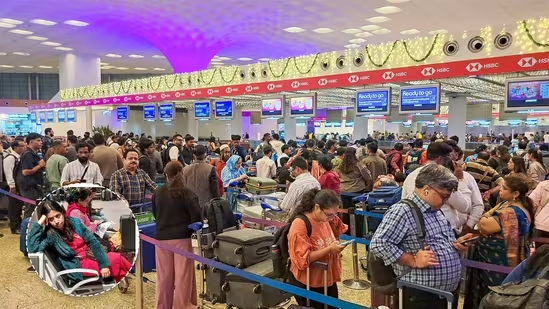
India’s largest airline, IndiGo, has cancelled over 1,000 flights in four days, causing massive chaos at airports nationwide. Long queues, stranded passengers and delays hit major hubs like Delhi, Bengaluru and Hyderabad.
The crisis began after new Flight Duty Time Limitations (FDTL) rules — including longer night duty limits and mandatory 48-hour weekly rest — pushed a large number of pilots into compulsory rest. Combined with winter schedules and minor technical delays, the disruptions snowballed.
In a major relief, DGCA has now rolled back a strict clause that barred airlines from substituting weekly rest with leave, giving IndiGo more flexibility to re-roster pilots. This is expected to help stabilise operations gradually.
Pilot unions blame IndiGo’s planning, citing understaffing and poor scheduling. The airline has sought time until February 10, 2026 to fully normalise operations.
For now, passengers continue to face delays as IndiGo works to rebuild its schedule amid India’s biggest aviation disruption in years.
What Triggered the IndiGo Crisis?
IndiGo claims “multiple unforeseen operational challenges,” but aviation experts point to one major factor: the sudden enforcement of the new Flight Duty Time Limitations (FDTL) rules meant to reduce pilot fatigue.
The rules include:
48-hour weekly rest (up from 36 hours)
Longer restricted night duty window
Only 2 night landings per week per pilot
Maximum of 8 flying hours at night
These norms pushed a large portion of IndiGo’s crew into mandatory rest just when the airline increased flights under its winter schedule, triggering a wave of cancellations.
DGCA Steps In — Key Rule Rolled Back
To ease the meltdown, the DGCA has withdrawn a strict FDTL provision that prevented airlines from substituting weekly rest with leave. With this relaxation, IndiGo can reassign pilots more flexibly and rebuild its roster faster.
This marks the first rollback since FDTL enforcement began, signalling that the regulator acknowledges the industry’s unpreparedness.
Why Pilots Blame IndiGo’s Management
Pilot unions allege IndiGo failed to plan for the new rules, citing:
Hiring freeze despite knowing FDTL changes were coming
Lean staffing to cut costs
Poor schedule planning
Over-aggressive winter expansion
Other airlines have managed the new norms better, unions say.
When Will Things Improve?
IndiGo has requested time until February 10, 2026 to fully stabilise operations. Passengers are advised to:
Check flight status before leaving home
Opt for flexible/refundable tickets
Carry essential supplies during travel
Final Takeaway
IndiGo’s crisis shows how tighter safety rules and high-frequency airline models clash without proper staffing. While DGCA’s relaxation may bring temporary relief, the road to full recovery remains long.